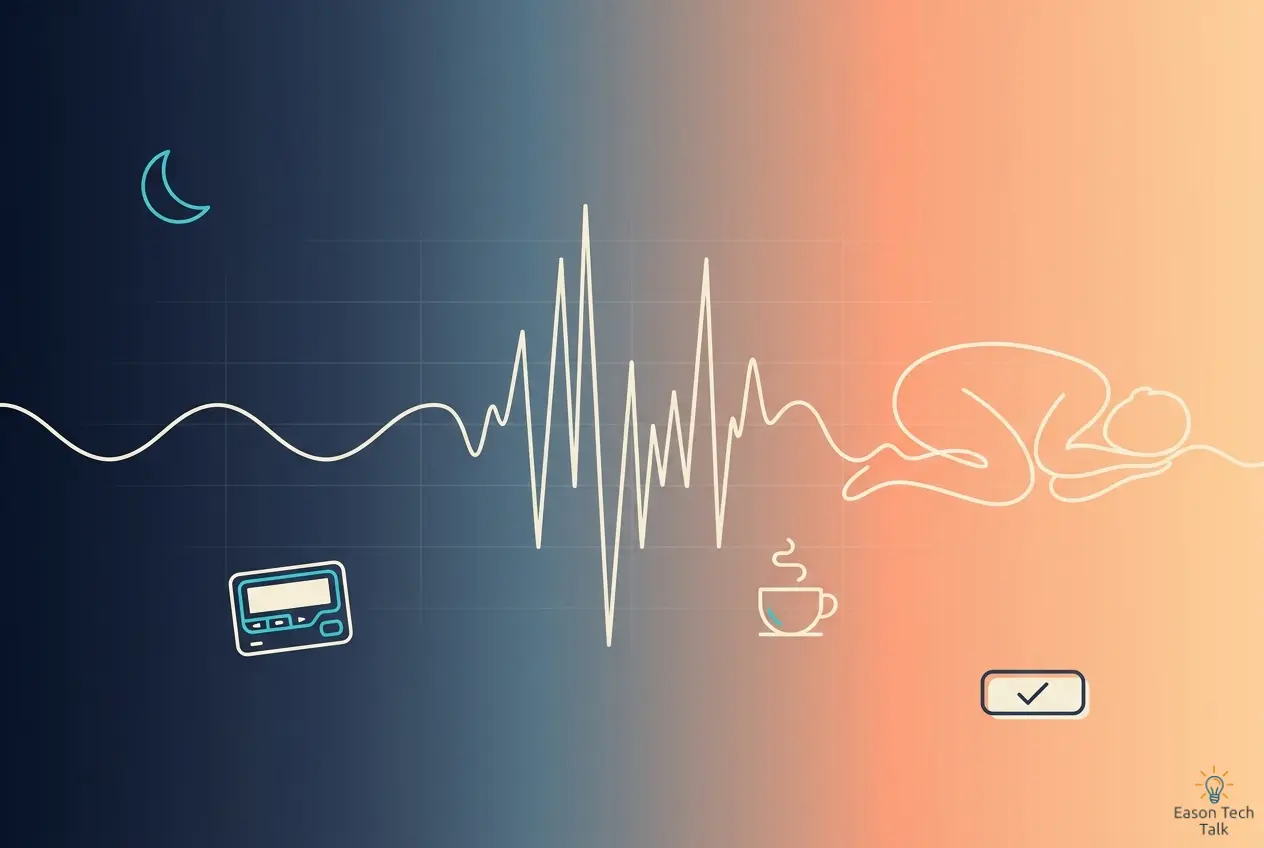
The Science of On-Call Anxiety: Phantom Pages, Sleep Debt, and Alert Fatigue
As an on-call engineer, the following situations are probably familiar: the pager did not ring, yet you vaguely heard an alert in your head. You pick up your phone only to realize it was an illusion. You are woken up in the middle of the night for a customer meeting, expected to answer questions before your brain has even booted up. You try to close your eyes for five minutes after work, but your mind races harder than when you were working. Your on-call shift ended days ago, yet you still instinctively open unresolved investigations from your rotation.
At first, I assumed these reactions were just personal weakness or burnout. After going through the literature, I realized they have names, research behind them, and countermeasures in clinical and occupational health studies. This article brings together the on-call-related phenomena, research evidence, and practical strategies I found useful.
On-call anxiety is never purely an individual problem. The sections below start with structural issues, such as alert design and rotation design, before returning to what individuals can do.
TL;DR: If You Only Do Three Things
If you can only pick three things to act on, here is the priority:
- Check alert design first: if a single on-call rotation has more than two incidents that actually need handling, or a large proportion of alerts require no action, the problem lies in system design, not personal resilience.
- Establish a wake-up protocol: when paged in the middle of the night, do not go straight to the computer. Use water, cold water, light, and movement to minimize sleep inertia first. Use caffeine only if necessary.
- Treat the on-call week as 60-70% workload: do not schedule deep work, important interviews, or high-stakes decisions. Treat standby as a work state, not a failed vacation.
The remaining sections provide the research basis, mechanism explanations, and detailed procedures behind these three points.
mindmap
  root(("On-Call Engineer<br>Mind-Body Survival Guide"))
    Why So Exhausting<br>Mechanisms and Names
      Phantom Vibration
      Hypervigilance
      Operant Conditioning
    Structure Before Individual
      Max 2 incidents per shift
      Alert tiering and tuning
      Single-site 8 or dual-site 6 each
      Runbook maintenance and updates
    Sleep Is the Bottom Line
      Sleep Inertia<br>Cognition drops after waking
      Wake-up Protocol<br>Water Cold-water Light Movement
      Bedtime regularity within 1 hour
      60-90 min wind-down before bed
    Standby Is Invisible Labor
      Being on standby is still working
      Attention Residue
      Ready-to-resume Plan
      Only respond when it rings
    On-Call Week Rhythm
      Plan for 60-70% workload
      Low cognitive load activities
      Request 5 min buffer after page
      Ultra-low-bar achievement checklist
    Pain Points by Role
      SWE or Platform Engineer<br>Deep work interrupted
      SRE or DevOps<br>Alert volume plus cross-team
      Customer or TSE<br>Customer emotions plus broad product scope
    When to Get Help
      Panic attacks or dissociation
      Persistent insomnia or phantom alerts
      Coping with alcohol or substances
      CBT or EMDR therapy
Names and Evidence
When I was on call, I often felt inexplicably anxious, even questioning myself: “Why does everyone else seem fine on call, but I am so anxious?” After talking with managers and colleagues, I identified a few possible reasons:
- Anxiety about uncertainty
- Worry about encountering unknown technical problems and not knowing how to handle them
- Fear of messing everything up
These psychological factors drive a cascade of physiological responses. For instance, even during quiet shifts, I sometimes felt my phone vibrating or heard alert sounds or notification tones, triggering tension and anxiety. But these reactions are not signs of personal weakness. They are the brain’s reasonable adaptation to long-term, unpredictable alert signals.
Some mindset adjustments may help ease the anxiety:
- When the pager goes off, nobody expects you to find the root cause on the spot. The priority is to stop the bleeding, or find someone to help stop it.
- Think it through first: even if you mess up the page or cannot solve the problem right away, what is the absolute worst outcome? Once you make the worst-case scenario concrete, it is usually not as terrifying.
- Others may be panicking, but I do not need to. I need to be calmer than those around me to actually solve the problem.
Understanding the names and literature behind these reactions is the first step to managing them. When you learn that many peers also experience phantom alerts, self-blame tends to drop.
Phantom vibration syndrome
Rothberg et al. (2010), in a cross-sectional survey published in BMJ, estimated that approximately 68% of medical staff had experienced phantom vibrations (Rothberg et al., 2010, BMJ 1). Lin et al. (2013), published in PLOS ONE, tracked 74 medical interns: at the start of their internship, 78.1% had already experienced phantom vibration and 27.4% phantom ringing; by the third month, the rates rose to 95.9% and 84.9% respectively, and by the sixth month remained at 93.2% and 87.7%. While anxiety and depression scores also rose during the internship, the authors specifically noted that the prevalence changes in phantom vibration and ringing cannot be reduced to a direct consequence of anxiety or depression. They are more akin to a common perceptual adaptation phenomenon in high-pressure environments (Lin et al., 2013, PLOS ONE 2). A 2014 cross-sectional study by Chen et al. further found that phantom vibration syndrome is independently associated with occupational burnout and may serve as an early indicator of work stress rather than being purely caused by anxiety or depression (Chen et al., 2014 3).
When the brain is trained to treat “any vibration or ringtone as a potential critical alert,” the signal detection threshold gets lowered, making it easy to misinterpret noise, such as clothing friction, heartbeat, or air conditioning hum, as an alert. Hearing phantom alerts after your on-call shift ends is not neurotic. It is your brain’s detection model not yet recalibrated to baseline.
Hypervigilance
After leaving AWS, I still get startled when I hear the Amazon Pager alert sound; by comparison, Google’s alert sound is much gentler. This is not about comparing brands. It is an intuitive example: the sound design of alerts directly shapes the nervous system’s response. When alert sounds are shrill, urgent, and loud, the brain treats them as danger signals. Over time, this forms a conditioned response: any sound with a similar frequency or rhythm, even a phone notification or elevator ding, pre-activates the sympathetic nervous system. Heart rate spikes, muscles tense, and breathing shallows. Conversely, if alerts are designed to be “recognizable but not alarming,” paired with tiering, where only the most critical alerts use the strongest sound and others use gentle cues, and reasonable noise management, the body will not be repeatedly trained into chronic hypervigilance.
Hypervigilance is one of the core symptoms of PTSD, but it does not require a traumatic event to be triggered. The on-call environment inherently has all the conditions to train hypervigilance: unpredictable triggers, high stakes, interrupted or fragmented sleep, and no clear off-duty boundary.
Dettmers et al. (2016), in Journal of Occupational Health Psychology, did something crucial: they compared days when employees “needed to remain available during non-work hours” versus days when they did not. The results showed that extended availability alone was enough to limit recovery experiences and was associated with next-morning mood and cortisol changes (Dettmers et al., 2016 4). A large survey study by Ziebertz et al. also found that rather than on-call burden being solely determined by hours, “stress from unpredictability,” “inability to relax during standby,” and “restricted activities” better explain fatigue, work-family interference, and subjective performance difficulties (Ziebertz et al., 2015 5).
In other words, the nervous system does not really distinguish between standby and on duty. This also explains why, on multiple occasions during on-call periods, I tried closing my eyes to meditate and ended up more anxious: normally we use work, meetings, and scrolling through our phones to mask internal vigilance signals. The moment you sit down and close your eyes, the background hypervigilance surfaces to conscious awareness, like how tinnitus is loudest in a quiet room.
Operant conditioning
Pager ringtones, Slack pings, and phone vibrations have been learned by the amygdala as high-intensity conditioned stimuli. Even after on-call ends, the “signal -> anxiety” reflex loop persists. It takes time for the brain to gradually let that association fade, a process psychologists call extinction. This explains why many people still habitually check their phones days after their on-call shift ends: conditioned reflexes do not disappear just because the rotation is over.
Start with Alerts
On-call anxiety is often not a personal resilience problem but an alert design problem. If the work environment is structurally driving people to collapse, no amount of personal techniques will do more than delay the breakdown.
Expect to handle no more than two events per on-call shift (e.g., per 12 hours): it takes time to respond to and fix outages, start the postmortem, and file the resulting bugs. More frequent events may degrade the quality of response, and suggest that something is wrong with (at least one of) the system’s design, monitoring sensitivity, and response to postmortem bugs. — Google SRE Book, Service Best Practices
In other words, a maximum of two incidents per shift is what Google considers the “learnable, recoverable” upper limit. Beyond that, engineers cannot properly analyze or write postmortems, they do not learn, and they burn out fast. Google also recommends that single-site on-call teams have at least eight members. Under the premise of “on-call not exceeding 25% of work hours,” that just supports primary/secondary dual rotation. For cross-region follow-the-sun rotation, Google recommends at least six people per site, or 12+ total, to avoid chronic nighttime pages.
Real-world industry conditions are usually far from this standard. In my experience, if a shift receives more than five alerts requiring actual action, more than 30% of alerts need no follow-up, the same service flaps multiple times daily, runbooks do not exist or are outdated, or fewer than five engineers share 24/7 rotation, then the priority should be improving alert design, not personal coping skills. These are team-level issues. Raising them in team retrospectives or postmortems, pushing for alert tuning, and advocating for more headcount is far healthier than one person toughing it out alone.
Sleep Comes First
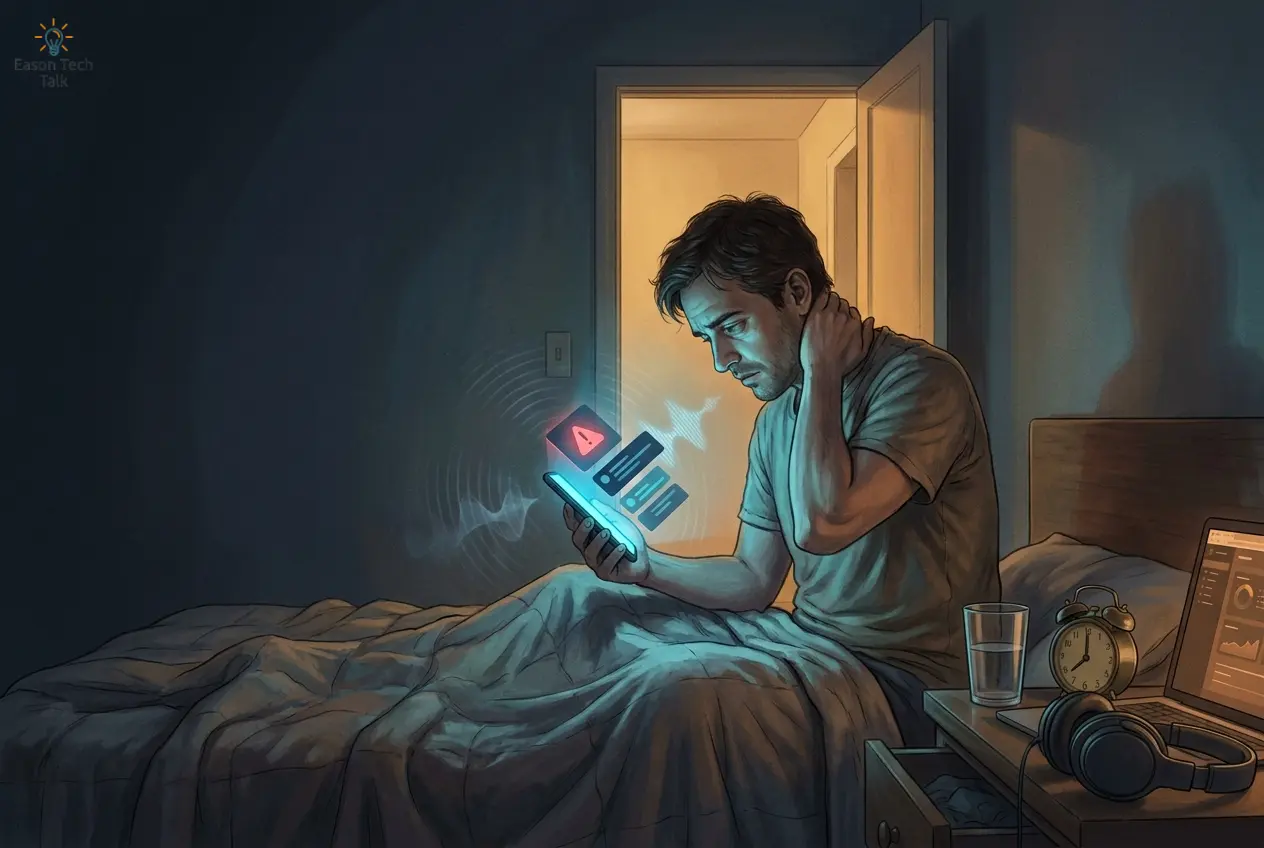
If on-call hours span the night, the damage to sleep goes beyond just “being woken up at 3 AM.” It simultaneously destroys three things: cognitive ability at the moment of waking, sleep regularity across the entire on-call cycle, and the ability to fall asleep after on-call ends.
Sleep inertia
Sleep inertia refers to the temporary decline in cognitive ability and reaction speed after waking. For most people, morning sleep inertia lasts 15-30 minutes; in severe cases, it can last hours (Hilditch & McHill, 2019, Nature and Science of Sleep 6).
The most dramatic finding comes from Wertz et al.’s 2006 study in JAMA. They directly compared cognitive performance in “just woken up” versus “already continuously awake” states. The counterintuitive conclusion: impairment right after waking may be worse than the fatigue caused by extended wakefulness (Wertz et al., 2006, JAMA 7). Scheer et al.’s 2008 study also found that sleep inertia is strongest when woken during the biological night (Scheer et al., 2008, J Biol Rhythms 8), exactly the scenario of being paged at 3 AM for a customer meeting.
In other words, you are not unprofessional. You are being asked to work while cognition is meaningfully impaired, in a state some researchers have compared with intoxication. Poor performance in the middle of the night is not just a personal failing; it has a physiological basis.
Wake-up protocol
This routine applies to two scenarios: waking up for an early on-call shift, and being paged in the middle of the night when you need to immediately join a customer meeting or make critical decisions. If you are just woken to confirm an alert and will go back to sleep after handling it, only do the physical wake-up steps, water, cold water, light, movement, and breathing. Skip the caffeine part, or it will ruin your subsequent sleep.
We cannot control when we get called, but we can control the environment. Prepare the night before: place a glass of water by the bed, turn on the lights when you get up, and lay out on-call clothes on a chair so you do not waste cognition on small decisions. After being woken:
- Drink that glass of water first; dehydration amplifies sleep inertia.
- Splash cold water on your face for 30 seconds. This may trigger the mammalian dive reflex and potentially help reduce physiological arousal and anxiety. There is not robust evidence that it directly shortens sleep inertia, but most people subjectively feel more alert.
- If it is daylight, stand by a window for 30-60 seconds. Even on cloudy days, outdoor illuminance is 10-100x higher than indoors.
- The entire routine takes about 3-4 minutes and makes a significant difference compared to going straight to the computer.
Regarding caffeine intake, only drink it when you are certain you will not go back to sleep, such as an early on-call shift wake-up, or near-dawn pages for customer meetings. The common advice to “not drink coffee immediately upon waking because it clashes with the cortisol peak and builds tolerance” is widely repeated, but the actual research evidence is quite thin. The cortisol awakening response varies greatly between individuals, and the causal relationship between caffeine tolerance and timing has not been definitively established. In practice, the safer approach is to finish the physical wake-up first, water, cold water, light, and movement, then drink coffee when your body is truly waking up and you need an extra boost, rather than using coffee as a power-on button. If you are paged in the middle of the night to handle an incident and still need to go back to sleep afterward, you should not drink coffee at all.
Sleep regularity
Many people think sleep is just about “getting enough hours.” But Windred et al.’s 2024 study in SLEEP, using UK Biobank data from over 60,000 participants, produced a counterintuitive finding: sleep regularity is a stronger predictor of mortality risk than sleep duration (Windred et al., 2024, SLEEP 9). Specifically, compared to the least regular quintile, the most regular quintile had 20-48% lower all-cause mortality risk, 16-39% lower cancer mortality, and 22-57% lower cardiometabolic mortality, and this effect was stronger than the impact of total sleep duration.
For on-call engineers, this finding means that while scheduling may be hard to change, bedtime is still a useful control variable. My approach is to decide wake-up time first, then work backward:
Bedtime = on-call start time - (60 min warm-up + 8 hours sleep + 15 min sleep onset latency)
For example:
- 8 AM on-call start -> 22:30 bedtime
- 6 AM on-call start -> 20:45 bedtime
- 9 AM on-call start -> 23:30 bedtime
The key is not “what time you sleep” but keeping the bedtime difference between on-call weeks and non-on-call weeks within one hour. The most common mistake is staying up late to “reward yourself” the moment on-call ends. This wrecks regularity worse than on-call itself, negating all prior efforts. Keeping weekend bedtimes within one hour of weekdays follows the same logic: social jet lag has a clear dose-response relationship with negative effects on metabolism, cardiovascular health, and cognition.
During the 60-90 minute wind-down before bed, I do several things: stop working and Slack, so the brain can switch from sympathetic to parasympathetic; dim the lights, to support natural melatonin secretion; do not scroll through my phone, because blue light plus anxiety-inducing content is a double hit; do not drink alcohol, because alcohol disrupts REM and is especially damaging for on-call anxiety; and keep room temperature at 18-20°C, because core body temperature dropping is the sleep onset signal. These sound like common sense, but the more anxious you are during on-call, the more likely you are to skip them, which makes sleep even worse.
Sustainable Rhythm
I frequently find myself trying to “relax” during on-call periods, then getting angry at myself for not being able to relax, often feeling like time passed with nothing accomplished, doubling the anxiety. This is especially true during weekends when I have to stay home on standby. But standby itself is a valid work state. Do not try to turn it into a vacation.
Standby is invisible labor
Your body is actually working all day: cortisol is elevated, attention is allocated to “will the pager go off,” and decision-making capacity is reserved for potential incidents. But this labor has no code commits, no closed tickets, and no photos for Instagram, so the brain cannot find evidence that anything happened today.
Attention residue
Leroy (2009), in Organizational Behavior and Human Decision Processes, proposed the concept of “attention residue”: when you switch from task A to task B, part of your attention remains on A, especially when A is not complete or has no clear closure point. This residue statistically significantly reduces your cognitive performance on B (Leroy, 2009, OBHDP 10).
(Note: the original research only demonstrated “a significant decline.” It did not quantify it as “brain power cut in half” or similar intuitive ratios. The latter is a simplification popular in blog writing.)
On-call is an extreme scenario for attention residue: task A, an incoming page at any moment, never closes, so everything you do in “personal time” carries residue. Not remembering what you read, losing the plot while watching a show, being absent-minded while messaging friends: it is not that you cannot focus, it is that your brain’s attention is pre-allocated to a permanently open task. This extension is my own interpretation of the on-call context, not the conclusion of Leroy’s original experiments.
Subsequently, Leroy & Glomb (2018) in Organization Science proposed the ready-to-resume plan as a countermeasure: when interrupted, spend a minute or two writing down “where I left off and what I need to do next.” A clear written closure lets the brain believe the task will not be lost, enabling a cleaner switch to the next thing (Leroy & Glomb, 2018, Organization Science 11). Applied to on-call: after handling each incident and before returning to your previous activity, spend one minute noting the incident ID, current status, what conditions to watch next, and under what circumstances you would be called again. This is much easier than just putting down the phone and returning to chores or reading.
Personal strategies
You can try applying Cognitive Behavioral Therapy (CBT) techniques to reframe your view of on-call. For example, mentally label Saturday 6 AM-6 PM as “work time.” After 6 PM is your weekend. This way you will not judge it against the standard of a “normal weekend” and will not feel like a failure. A day occupied by work typically does not look like a free day anyway.
During on-call, you can also give yourself an ultra-low-bar achievement checklist:
- Walk for 15 minutes; do not go too far from home.
- Finish one chapter of a book or one article.
- Make a proper cup of coffee or take a photo.
- Write three lines in a journal.
Check off one per day, and you are giving the brain observable evidence that something happened today. Without this anchor, standby mode swallows the entire day, and it is psychologically easy to feel like nothing was accomplished.
I plan on-call weeks as 60-70% workload weeks: no meetings requiring deep discussion, no long-duration deep work, no learning new technologies, no interviews, and enough buffer time for frequent context switching. Compared to scheduling at 100% and then constantly crashing due to incidents, this approach is far more sustainable.
As for how to spend standby time during on-call, the key is replacing pure relaxation with low cognitive load activities. Meditation tends to amplify anxiety for people in hypervigilant states because it forces you to attend to internal signals. Activities that occupy 70% of the brain while leaving 30% available to respond to pages are much easier, for example, walking outdoors, cooking, washing dishes, tidying up, doing jigsaw puzzles or similar simple crafts, or listening to podcasts rather than pure music. The brain has something to hold onto so it will not wander as much. These activities share common traits: they are rhythmic, provide feedback, and have low decision burden.
Another common bad habit is checking the dashboard or Slack every five minutes. This is compulsive reassurance behavior that reinforces the anxiety loop. The principle is simple: only respond when it rings. If you do not trust your alerting system, that is an alerting design problem, not something more frequent manual checking can solve.
Take 5 minutes
On-call usually has a corresponding Response SLO. Under this mechanism, if there is no response within a certain time, it escalates further. Whether it is an incident channel, customer meeting, or a manager escalating a case to you, unless it is a hair-on-fire P0 event requiring an immediate join, you should make good use of the SLO design and reserve buffer time for yourself to respond. This also means that after receiving a page and completing the Ack, I can:
- Use the bathroom, pour a glass of water, then return to the keyboard.
- Briefly wrap up what I was doing, or jot down current progress.
- If it is a familiar service, quickly skim the most recent similar incident’s postmortem or the corresponding runbook to load “how it was handled last time” into working memory.
I also often remind myself: others may be panicking, but I do not need to. I need to be calmer than those around me to actually solve the problem. If someone keeps pushing, try communicating:
Give me 5 minutes to spin up - I’ll join with context.
If woken in the middle of the night, these five minutes can somewhat reduce sleep inertia damage and establish a minimum level of situational awareness. Arriving five minutes late with context is far better than joining on time with zero situational awareness.
Role Notes
Different on-call roles face different pain points. Here are supplements for several typical roles.
Software Engineer or Platform Engineer
The main on-call pain point is deep work being interrupted, though incident frequency may not be high. An effective approach is to schedule no focus blocks or important PR reviews during on-call weeks. During standby, pick small tasks, such as code review, documentation, tech debt, or learning, and use on-call downtime to improve your service’s alerts and runbooks. This directly benefits the next on-call colleague.
SRE or DevOps
The main on-call pain point is alert volume plus cross-team coordination. If the team adopts Google SRE’s “2 incidents per shift” principle to calibrate alert design, it can effectively reduce unnecessary toil. After each on-call rotation, do a personal retrospective asking which alerts were noise and which runbooks need updating. Postmortem culture is the most effective long-term stress reducer. Blameless retrospectives turn incidents into learning rather than trauma.
Customer Engineer or Technical Solution Engineer
This role is particularly demanding, especially when dealing with enterprise or premium customers. The challenge is: you are not just solving problems; you are also managing customer emotions, the product surface is too broad to know deeply everywhere, and customers often expect immediate responses.
In this case, define the role as incident commander rather than SME. The on-call job is to understand the impact, including severity and affected users, reduce customer anxiety by showing that someone is working on it, find the right people, and maintain a regular communication cadence. “I do not know” is a valid answer as long as it is followed by “but I will find someone who does.” A standard script for customers:
I’m not the SME for this specific component, but I’m pulling in [team] now. In the meantime, let me confirm the impact so we can prioritize correctly.
This phrasing honestly admits unfamiliarity, which builds trust, provides a next step, which reduces anxiety, and redirects the conversation to what you can control. Additionally, building a personal runbook during non-on-call time is especially important for the TSE role: every time you encounter an unfamiliar product, spend 15 minutes noting what it does in one sentence, three common failure modes, who to contact, such as team / Slack channel / on-call rotation, and where the dashboard is. After two or three on-call cycles, you will have a personal cheat sheet more practical than any official runbook.
When to Get Help
While on-call anxiety is a reasonable occupational adaptation within a certain range, the following signals warrant seeking professional medical advice:
- Still unable to relax or stop checking Slack 1-2 weeks after on-call ends
- Starting to fear the next on-call, not just dislike it
- Affecting non-work relationships, interests, or appetite
- Experiencing panic attacks, such as sudden rapid heartbeat, difficulty breathing, or feeling like you are dying
- Coping with alcohol, substances, or binge eating
- Experiencing dissociation, persistent intrusive thoughts, or phantom alert hallucinations before falling asleep
These conditions do not necessarily equate to a formal PTSD diagnosis, but in clinical language they can be understood through hypervigilance, occupational stress, sleep disorders, anxiety responses, or even trauma-related symptoms. For PTSD or trauma-related symptoms, trauma-focused CBT and EMDR are common, evidence-based treatment options; the actual number of sessions needed depends on symptom severity and individual background. The UK Royal College of Psychiatrists also notes that psychological treatment for PTSD is commonly arranged for about 8-12 sessions, though complex cases may require longer. Most importantly, do not wait until “I am about to collapse” to seek help. Preventive engagement with professional support is more effective and less expensive. This is not weakness. It is occupational injury. Just as RSI is an occupational injury from long-term typing, hypervigilance is an occupational injury from long-term on-call.
Conclusion
On-call is a necessary tax of modern distributed systems, but this tax can and should be designed to be sustainable. If you can only pick three things: audit your alerts this week, silence or convert to visual-only any that do not require immediate action; strictly follow the wake-up protocol next on-call, water -> cold water -> light -> movement -> breathing; and long-term, keep bedtime regularity within ±1 hour.
Experiencing phantom alerts, being unable to make decisions when woken, and being unable to relax during standby are all physiological responses with research backing, recognized names, and countermeasures. They are not personal resilience problems. The structural layer, including alert tuning, rotation design, and blameless culture, is the team’s responsibility. The personal layer, including sleep, nutrition, exercise, and psychological tools, is what you can control. Both are indispensable.
Everyone’s work environment, biological rhythm, and team culture are different, and not every recommendation in this article will suit everyone. The key is to first understand the mechanisms behind these reactions, then pick tools suited to your own situation and iterate.
References
-
Rothberg, M. B., Arora, A., Hermann, J., Kleppel, R., St Marie, P., & Visintainer, P. (2010). Phantom vibration syndrome among medical staff: a cross sectional survey. BMJ, 341, c6914. BMJ
PubMed 21159761 ↩ -
Lin, Y. H., Lin, S. H., Li, P., Huang, W. L., & Chen, C. Y. (2013). Prevalent hallucinations during medical internships: phantom vibration and ringing syndromes. PLOS ONE. PMC3677878 ↩
-
Chen, C. P., Wu, C. C., Chang, L. R., & Lin, Y. H. (2014). Possible association between phantom vibration syndrome and occupational burnout. Neuropsychiatric Disease and Treatment. PMC4310551 ↩
-
Dettmers, J., Vahle-Hinz, T., Bamberg, E., Friedrich, N., & Keller, M. (2016). Extended work availability and its relation with start-of-day mood and cortisol. Journal of Occupational Health Psychology. PubMed 26236956 ↩
-
Ziebertz, C. M., et al. (2015). The relationship of on-call work with fatigue, work-home interference, and perceived performance difficulties. PMC4628979 ↩
-
Hilditch, C. J., & McHill, A. W. (2019). Sleep inertia: current insights. Nature and Science of Sleep. PMC6710480 ↩
-
Wertz, A. T., Ronda, J. M., Czeisler, C. A., & Wright, K. P. Jr. (2006). Effects of sleep inertia on cognition. JAMA, 295(2), 163-4. PubMed 16403927 ↩
-
Scheer, F. A. J. L., Shea, T. J., Hilton, M. F., & Shea, S. A. (2008). An endogenous circadian rhythm in sleep inertia results in greatest cognitive impairment upon awakening during the biological night. Journal of Biological Rhythms, 23(4), 353-361. PMC3130065 ↩
-
Windred, D. P., Burns, A. C., Lane, J. M., Saxena, R., Rutter, M. K., Cain, S. W., & Phillips, A. J. K. (2024). Sleep regularity is a stronger predictor of mortality risk than sleep duration. SLEEP, 47(1), zsad253. Oxford Academic ↩
-
Leroy, S. (2009). Why is it so hard to do my work? The challenge of attention residue when switching between work tasks. Organizational Behavior and Human Decision Processes, 109(2), 168-181. DOI ↩
-
Leroy, S., & Glomb, T. M. (2018). Tasks interrupted: How anticipating time pressure on resumption of an interrupted task causes attention residue and low performance on interrupting tasks and how a “ready-to-resume” plan mitigates the effects. Organization Science, 29(3), 380-397. DOI ↩