Deep Work Tips for Engineers (Saved Me From Burnout)
As an engineer passionate about productivity, I’ve spent years researching how to work more efficiently.
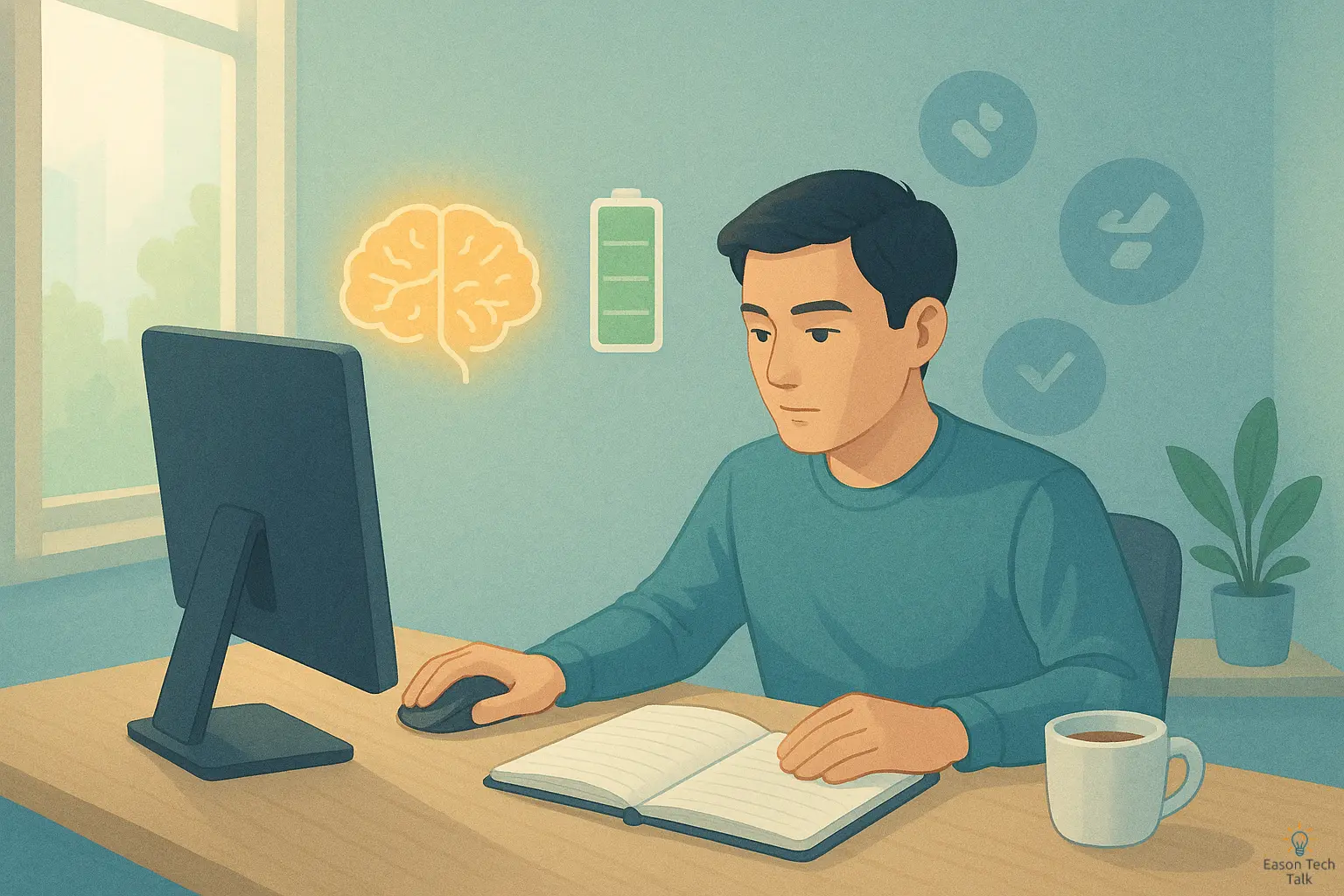
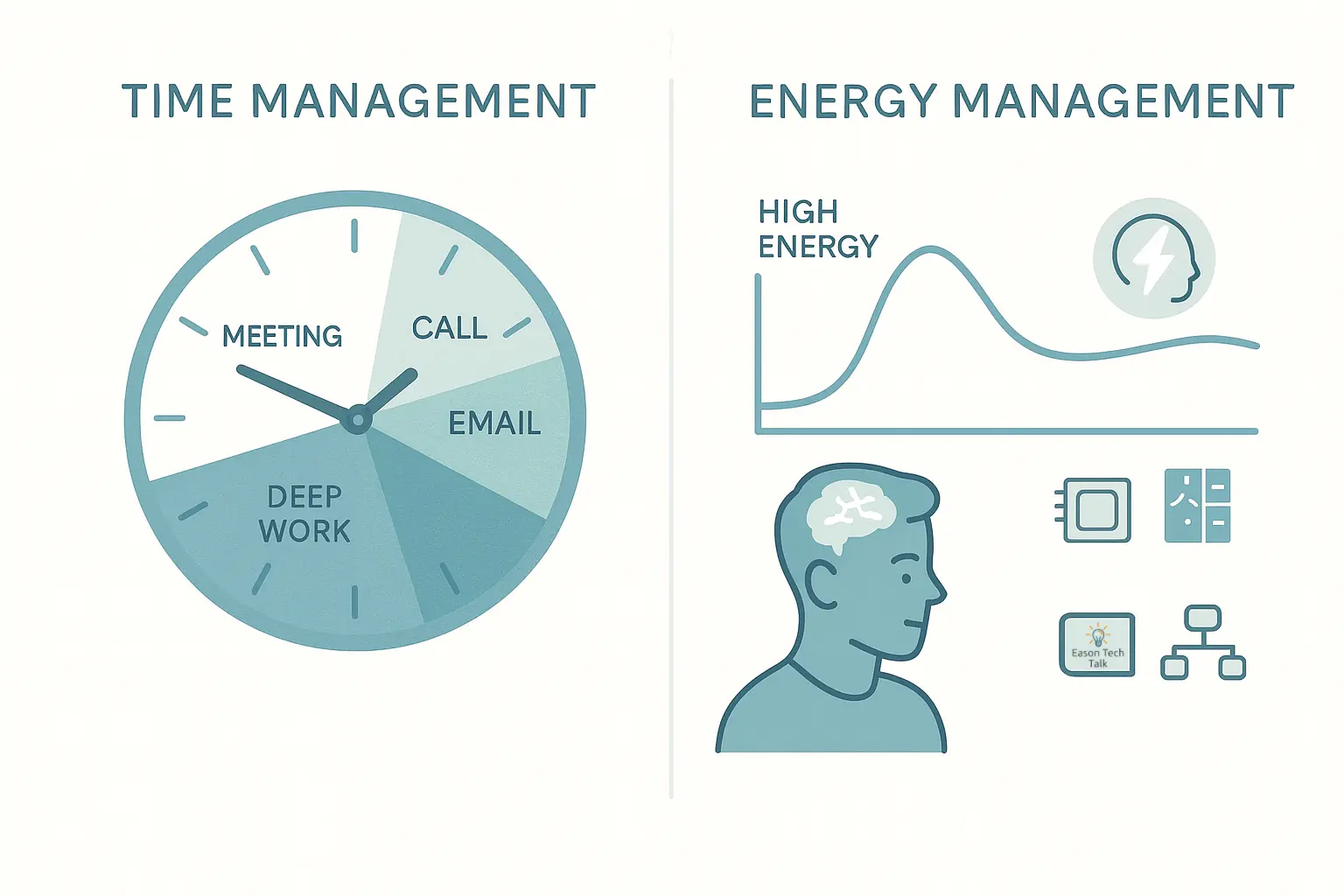
I used to think productivity was all about time management and the right tools: GTD to-do lists, strict schedules, longer hours, and countless strategies. After years of trying, I realized these methods don’t necessarily work—at least not for me. They weren’t just ineffective; trying to follow them while battling feelings of “not being productive enough” and staring at endless to-do lists only increased my anxiety and stress. What actually transformed my efficiency was learning to manage my energy and motivation instead. For example, shifting from “how much do I need to accomplish today?” to “what tasks match my current state?” made work more flexible and sustainable.
This article shares the key principles I’ve found most effective through my long journey. I believe a good productivity system isn’t one-size-fits-all, it needs to be built through trial and error, based on your personality, work style, and unique characteristics.
Below are practices I’ve found comfortable that generate consistent energy, maintain sustained productivity, and help avoid burnout. These methods may not apply to everyone, but I hope they provide some inspiration.
Manage Energy, Not Time
Many people assume tech industry work is less demanding than blue-collar jobs requiring significant physical labor. The stereotype suggests this work is relatively easy—especially now with generative AI to help—as if we can simply coast through the workday.
This impression overlooks a crucial fact: while knowledge work doesn’t require physical labor, it demands substantial mental energy and focus. Programming, system design, troubleshooting—these tasks all carry a high cognitive load. When mental energy runs out, no amount of tools or technology can prevent productivity from plummeting.
Mental energy depletes faster than physical stamina, leading to stress and rumination that lingers long after work hours. We end up mentally exhausted, wanting nothing more than to become couch potatoes. We scroll through our phones or nap, thinking we’ve rested adequately, yet the stress never truly leaves.
The most telling sign: lying in bed at night when work-related thoughts suddenly intrude, pulling us in so we can’t truly relax. Or feeling exhausted yet unable to fall asleep due to anxiety. Poor sleep quality inevitably leads to physical and mental health issues over time.
The Real Foundation of Knowledge Work Productivity
After trying countless methods, I’ve discovered that effective time management and productivity for knowledge workers boils down to two key elements:
- Sleep well: Quality sleep matters more than any other productivity principle
- Manage your physical and mental state: Maintain vitality through light exercise, stress relief, and healthy eating
How often are you truly in a state of “full energy and motivation”? When I’m fully energized, every challenge feels fresh and interesting. I can tackle ten things at once and easily enter flow state. But when I’m “tired and irritable,” even the simplest bug feels insurmountable. Forcing yourself to work in this state doesn’t just lower efficiency—it drains mental energy. It’s like an overheated CPU that throttles processing speed and throughput, affecting the entire system’s stability and performance.
Traditional time management assumes we have consistent energy every day. That’s not reality. Our state fluctuates with sleep quality, physical fatigue, and psychological stress. Sometimes we’re energized and clear-headed; other times we’re exhausted and unable to concentrate.
Prioritizing our physical and mental state is what enables consistent, high-quality work. This isn’t laziness—it’s working smarter. When our mental state is good, one focused hour can accomplish what takes three hours when exhausted.
How to Sleep Well
Sleep quality directly impacts my next-day work performance, regardless of how much I exercise or relax. Quality sleep sharpens focus, creativity, and problem-solving—all essential for engineering work. While countless studies and books highlight sleep’s importance, more appealing distractions often pull our attention away from this fundamental need.
What transformed my productivity was treating sleep as my highest priority. Many people think sleeping well simply means going to bed at night, but preparing for quality sleep actually begins in the morning:
- Get 10–15 minutes of sunlight after waking up (even better with a walk). This promotes hormones like serotonin that regulate your circadian rhythm (How to Feel Energized & Sleep Better With One Morning Activity | Dr. Andrew Huberman)
- Avoid caffeine after noon (2–3 PM)
- Stay away from screens and blue light 60–90 minutes before bed to let your brain wind down
- In bed, practice releasing tension and relaxing every muscle through breathing and meditation, letting your mind gradually settle
A stable sleep routine, controlled caffeine timing, and a good sleep environment—these simple adjustments can dramatically improve sleep quality and transform your entire working state.

A great morning starts the night before.
Monkey’s Night Routine That Makes Every Morning Easy (The Secret to Better Sleep) introduces a six-step evening routine for better sleep and easier mornings. The core idea: create a consistent bedtime ritual that helps your body and mind prepare for sleep. This routine improves sleep quality and makes mornings more relaxed and energized.
Leverage Your Natural Energy Rhythms
Morning people naturally harness their early hours for maximum clarity and tackle their hardest tasks first, while night owls hit their stride late at night when seemingly impossible work becomes effortless. The key is understanding your own biological rhythm and scheduling work to match it.
For example: tackle system design and deep thinking during your energized mornings, then shift to documentation or meetings during lower-energy afternoons. This approach helps you maximize the value of every hour.
When I’m truly exhausted, I listen to my body and allow myself to rest. Rather than pushing through fatigue, learn to recognize your state and adjust your work accordingly. When tired, focus on lighter tasks—responding to emails, organizing documents, or cleaning up your desktop. Save programming and deep work for when you’re energized and sharp.
Scheduling and Prioritization
Once you understand your energy peaks and sleep patterns, the next step is building an effective task scheduling system. Through reading and experimentation, I’ve found the most practical approach combines several classic prioritization principles:
If you could only do one thing today, what would be most important? (Daily Highlight - from Make Time 1)
- If the task isn’t urgent: Invest 20% of your time to generate 80% of results (80/20 rule)
- If the task is time-sensitive: Use the Eisenhower matrix (urgent and important)
- Do one thing that, even if it fails, still moves the needle forward and makes everything else easier (The One Thing 2)
Set one task per day—three maximum—to maintain focus and concentrate your resources on a single priority (One Thing). This avoids the energy drain of juggling multiple tasks. This “less is more” strategy ensures you invest your best energy into what truly matters, rather than exhausting yourself by jumping between tasks.
Timeboxing & Time Blocking
Timeboxing and time blocking share the same core idea: plan your day in advance using calendar to maximize focus and productivity.
Pre-planning time blocks creates a predictable work rhythm and sets clear time limits for your brain, reducing decision fatigue and procrastination.
Time blocking works best once you understand your energy peaks and scheduling priorities. Use your calendar to plan blocks in advance—schedule high-focus work during peak energy periods and leave appropriate buffers for different task types. This ensures important tasks get sufficient focused time while preventing the stress of overly optimistic estimates that lead to an overcrowded schedule.
Daily Themes
Daily themes divide your week into themed days, giving each day a specific focus area. For example: Monday for system design and architecture, Tuesday for technical debt, Wednesday for team collaboration and meetings. This reduces the types of tasks you handle each day, letting your brain immerse more deeply in a specific domain. It also makes it easier for team members to predict your availability and focus areas.
The most effective daily theme strategy for me is to bin-pack meetings into one specific weekday while protecting Mondays and Fridays for deep work. This trains my brain to expect focused, uninterrupted time on certain days—creating complete thinking blocks for technical tasks that demand sustained concentration. Meanwhile, I batch meetings and transactional work on a mid-week day. This approach delivers several advantages: you can chain related discussions together, critically evaluate whether each meeting is necessary, set clear agendas with specific outcomes, and work within defined time boundaries. The result is more efficient meetings and a mind that stays in “meeting mode”—which, surprisingly, feels highly productive.
Even when occasional executive meetings or team needs arise, maintaining complete thinking blocks on specific days each week remains the core principle. When meeting requests come in, ask others to schedule on the available meeting days shown in your calendar whenever possible.
Managing Your Physical and Mental State
Knowledge work is mentally demanding. Long hours staring at screens quickly drain mental energy, yet we often underestimate how this affects our physical and mental well-being. Just as muscles need rest between strength training sessions to recover and grow, our brains require regular rest and nourishment to maintain peak performance. Short breaks and activity switches effectively prevent mental fatigue from building up.
Optimization Insights
I’ve found that dedicating 15–30 minutes daily to changing environments—taking a walk, doing light cardio at noon, or even napping when possible—significantly boosts afternoon focus and creativity. This isn’t just physical rest; sleep is essential for the brain to organize information, consolidate memories, and restore cognitive function.
Knowledge workers should deliberately schedule regular time for exercise and socializing. These activities sustain long-term performance by improving physical health and boosting dopamine and endorphins, which enhance mood and cognitive function.
Clean Eating
Diet significantly impacts physical and mental state. Processed foods, excess sugar, and caffeine cause blood sugar fluctuations that disrupt focus and emotional stability. Prioritize whole foods, vegetables, fruits, and high-quality protein while minimizing refined sugars and processed foods.
If refined foods affect my work performance, I schedule them for evening, keeping daytime clear and focused. Stay well-hydrated—dehydration causes fatigue and decreased attention.
Gamification: Breaking Large Tasks into Small Wins
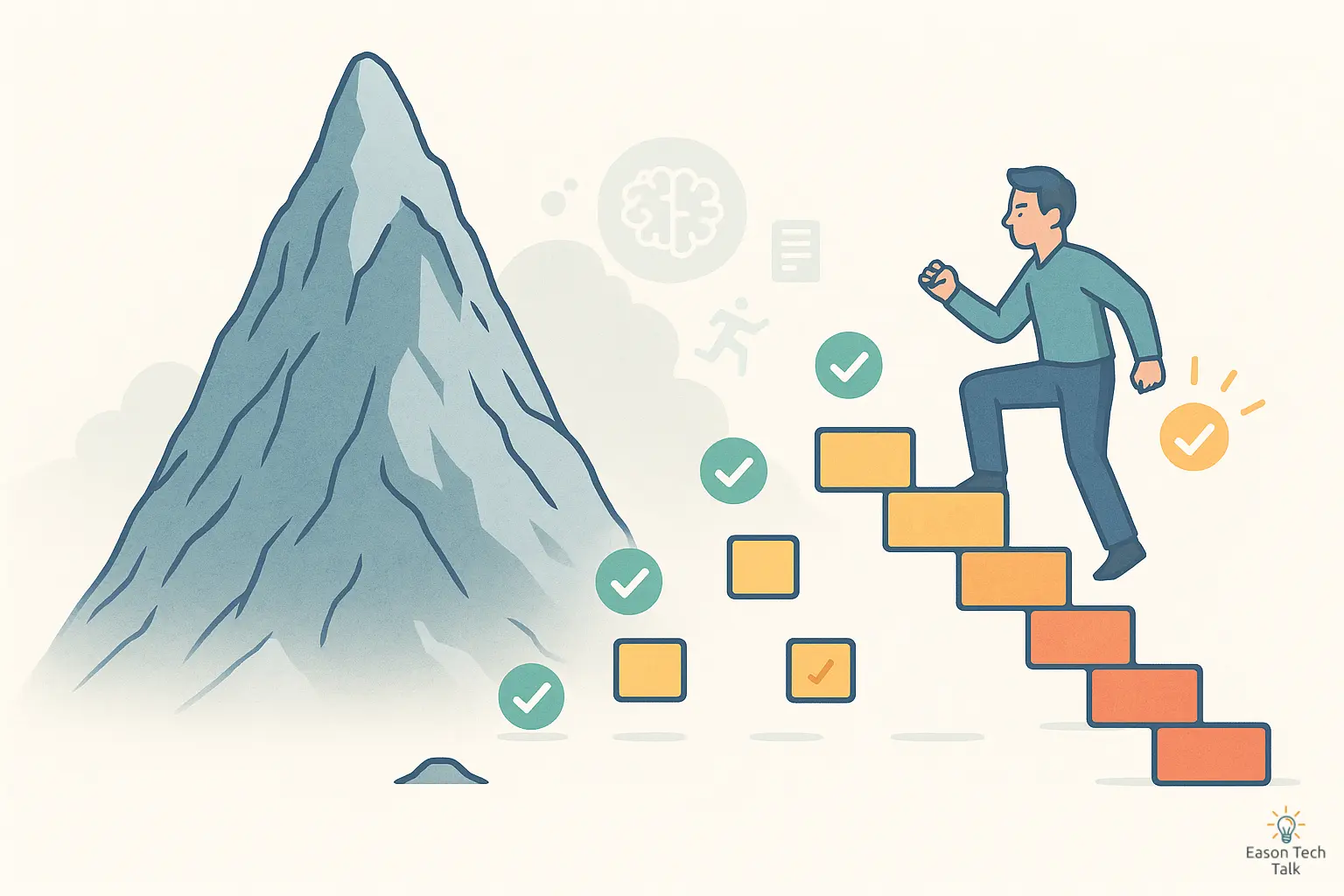
When facing complex projects, the psychological challenge is often greater than the actual execution difficulty. But when we break down massive goals into a series of completable small steps, we not only reduce psychological pressure—the sense of achievement from completing each small step also motivates us to keep moving forward. This method is particularly effective for handling seemingly distant large-scale projects.
Break tasks into extremely small steps—so small that starting feels effortless. For example, “complete the entire project” feels overwhelming, but “list possible execution steps” is manageable. Once you’ve listed the steps, break them down further. Starting creates momentum that carries you forward.
Environment Management: Minimize Distractions and Maintain Focus
Modern applications bombard us with instant notifications, messages, and overwhelming information that constantly fragment our attention. More concerning, these fast-consumption patterns are destroying our brain’s ability to focus 3 and fueling anxiety and unease 4.
We can restore our ability to concentrate by eliminating one digital distraction source per week—turn off unnecessary notifications, unfollow negative content, limit news browsing time, and so on.
Reducing Context Switching
Context switching is one of the biggest efficiency killers for knowledge workers. Every time we switch between tasks, our brain needs extra time to re-enter flow. This “switching cost” can drain up to 40% of our productivity (Quality Software Management: Systems Thinking). For programming work requiring deep focus, frequent context switching severely impacts code quality and problem-solving ability.
The solution: deliberately minimize context switching. Specific practices include:
- Batch similar tasks: Consolidate communication tasks like email responses into fixed time blocks rather than responding throughout the day. This protects the integrity of deep work periods.
- Turn off instant messaging notifications: During focus periods, disable notifications from messaging tools and check messages at scheduled times. Let colleagues know your “focus hours” and set clear response time expectations.
- Focus on a single task: When tackling complex problems, close all windows and tabs unrelated to your current task. Even when waiting for code to compile or tests to run, resist switching to other work. Use these brief moments for deep breathing, getting coffee, or thinking through the current problem—avoiding attention residue that comes from task switching.
- Centralize meeting times: As mentioned earlier, I group meetings into specific time blocks to prevent them from fragmenting my workday. When meetings at other times are unavoidable, I schedule them during lower-energy afternoons, preserving high-efficiency mornings for deep work.
Reducing context switching has improved my work efficiency and shortened my work hours—while noticeably decreasing stress and fatigue. When your brain maintains continuous focus on one type of task, both work quality and completion speed improve significantly.
Take Daily Notes
Building a daily recording habit helps you track work progress, capture inspiration, and reflect on growth. Spend 5–10 minutes each day recording important tasks, quick notes, and areas needing improvement or follow-up. This simple practice significantly enhances self-awareness and work efficiency.
- Record daily highlights (What I worked on) 5: Write down the important tasks you completed or small victories worth celebrating. This builds a positive mindset and sense of accomplishment.
- Plan tomorrow’s priorities (Next): At the end of each day, I list tomorrow’s key tasks. This lets my brain prepare in advance, helping me enter work mode faster the next morning.
1-1 Meeting Techniques
One-on-one meetings are essential for building strong working relationships and promoting personal growth. Through effective 1-1s, you can align on your current status and needs while securing the support and guidance you require.
Here are practical techniques I’ve learned:
- Focus on priorities: Clearly communicate your current workload and priorities. This helps your manager understand your situation and ensures you get the support and resources you need when necessary. (Inspired by Cal Newport’s Slow Productivity)
- Don’t use 1-1s only for status updates: Share most information through written records before the meeting. Use meeting time to discuss challenges, receive feedback, and explore growth opportunities.
- List current projects: Briefly explain each project’s status, expected completion time, and potential risks. Give your manager the full picture rather than waiting until problems arise.
- Ask for support: When tasks encounter obstacles or need additional resources, raise this proactively. This may include technical support, time adjustments, or cross-team collaboration.
I use the following template structure in one-on-one meetings. It helps me organize discussion content and ensure meeting time is fully utilized:
- Update since last 1-1
- Share progress and achievements: Briefly share progress and completed milestones to help managers and colleagues understand your current status or challenges.
- Unstructured chat: Share interesting moments from recent life or personal updates to build deeper connections. These casual conversations build trust and make work discussions smoother.
- What’s in My Plate
- List current projects: Briefly explain each project’s status, expected completion time, and potential risks. Give your manager the full picture rather than waiting until problems surface.
- Mark priorities: Clearly indicate which tasks are high priority and which can be deferred. This helps you make wise decisions when resources are limited.
- Things to discuss
- Ask for support: When tasks hit obstacles or need additional resources, raise this proactively. This may include technical support, discussing solutions, timeline adjustments, or cross-team collaboration.
- Discuss career development: 1-1s aren’t just about work—they’re opportunities to explore personal growth goals, learning needs, and career planning. Regular conversations help align your development with organizational objectives.
Structured 1-1 meetings and daily note-taking help me manage work more effectively, promote personal growth, and build stronger communication and trust with my team.
Conclusion
The work habits and techniques I’ve shared come from gradual learning and practice. They’re not perfect—everyone’s work style and environment are different, so you don’t need to follow every suggestion. Instead, find what works best for you. Through continuous experimentation and adjustment, you can optimize your workflow to maintain both efficiency and balance throughout your engineering career.
References
-
Choose a Highlight To Make Time Every Day | Make Time Tips & Productivity Advice ↩
-
How I Prioritize Projects: The Key Questions to Ask | Q&A with Tim Ferriss - YouTube ↩
-
Demystifying the New Dilemma of Brain Rot in the Digital Era: A Review - PMC ↩
-
Exploring Problematic TikTok Use and Mental Health Issues: A Systematic Review of Empirical Studies - PMC ↩
-
Why every dev needs a coding journal no, your memory isn’t enough - DEV Community ↩